
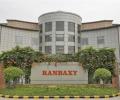
The FDA actions eventually led to a $500-million fine for Ranbaxy as well as the effective mothballing of many of its Indian factories.

Today, apologies by CEOs of global corporations have become so common that you get case studies on the subject.

In May this year, Ranbaxy had pleaded guilty to 'felony charges' for violating manufacturing norms and agreed to pay $500 million penalty to US authorities.

Ranbaxy Laboratories on Wednesday reported widening of its consolidated net loss to Rs 1,029.72 crore (Rs 10.29 billion) for the third quarter ended December 31, 2014

Headhunters said the demand for foreigner CEOs is coming from companies that have developed a global footprint and sectors which do not have enough talent in the country -- hospitality, insurance, retail and power, for instance. They are meant to fill a need gap and are not just trophies on display.

And when an inspector asked about the contents of unlabelled vials in the laboratory glassware washing area, a plant worker dumped them down a sink and said the contents could not be determined, according to a July 18 letter from the US Food and Drug Administration to Wockhardt, which makes sterile injectable drugs and various forms of insulin.

'Nothing in this world is permanent. So also in business.' 'And more so in family businesses where family issues often influence business decisions,' point out S Subramanian and Nupur Pavan Bang.

The latest whistle-blower revelations of multiple shenanigans at global ride-hailing app Uber, coming thick and fast after serial exposes of various dodgy practices at Facebook, Apple, Amazon, Netflix, Google in the recent past raises uncomfortable questions about India Inc. If the FAANGs, Twitter and Uber can be guilty of multiple and diverse transgressions what's happening in Indian corporations? It can be nobody's case that India's largely family-owned and - managed private sector is a beacon of transparency or best corporate governance practices, bolstered as it is by an informal omerta among employees, managements and even boards.
He has already spearheaded eight significant acquisitions within and outside the country

'... And I don't think it really is that despite a lot going wrong.' 'Naiveté or stupidity or trusting the wrong person, the outcome is the same, which is that the group has gone to trash.' 'I'm not OK with people saying I had a role to play in crooking the system, which is not what I did.'
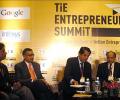
A nervous energy that keeps you going, a passion to do something different, and the grit to tide over any crisis are the ingredients, say panelists at the TiE Summit.

Simanta Sharma, MD and CEO of bolohealth.com, shares his success mantras.

Brian Tempest is among the four directors of cash-strapped healthcare chain whose removals were sought by two institutional investors. Three directors -- Harpal Singh, Sabina Vaisoha and Tejinder Singh Shergill -- had already resigned before the EGM.

Top ten billionaires in India.

The list of corporations publishing biographies has lengthened steadily as companies have realised the effectiveness of story telling as a brand building tool. Kanika Datta investigates the rising trend.

Ballooning debt forces more and more Indian promoters to sell out to global majors and PE players.

'India is home to the third-largest number of family-owned businesses in the world.' 'While everyone pays lip service to succession planning being entrenched in the functional DNA of family-owned business enterprises, it's still not an area of focus for a lot of family businesses', points out Shyamal Majumdar.

A glance back at some of the important ups and down Indian Inc faced in 2018.

Margaret A Hamburg, the first commissioner of the US Food and Drug Administration (US FDA) to visit India officially, will meet heads of major domestic pharma companies such as Ranbaxy, Wockhardt, Cadila Healthcare and Lupin in New Delhi.

Focus on the best you can do with what you've been given.

Sachin Bansal, who had co-founded Flipkart with Binny Bansal in 2007, would exit the company

Top companies added employees at 3% CAGR from 2003-04 to 2013-14, while revenues grew at 18%.

Mergers are not just about balance sheets or marketing synergies; they are also about those who make the synergies real.

Post-elections, the pace is expected to be greater for inbound deals, which have been largely pushed back for many months now for want of better clarity on the policy stance of new government, experts said.

Few top honchos of India Inc did very well in 2014.

The 30-share Sensex ended down 604 points at 28,845 and the 50-share Nifty ended down 181 points at 8,757. The Bank Nifty ended down 602 points at 19,146.

The sharp fall in the rupee's value against the dollar during the July-September quarter, it turns out, has come as a boon for corporate earnings.

Piramals are the largest investors in the Indian real estate sector after HDFC, with investments worth $3 billion already.

A majority of India's billionaires gained wealth in the last one year in spite of the stock market decline.
 © 2026 Rediff.com - Advertise with us - Disclaimer - Privacy Policy - Sitemap - Feedback - About us - Terms of use - Grievances